How AG Jeans Modernized Shopify to Improve Performance and Reduce Merchandising Overhead

Summary
Executive Summary
Read on to learn how AG Jeans upgraded its product discovery to support a faster, Shopify-aligned ecommerce experience. With Constructor, the team was able to:
-
Replace a high-overhead search implementation that was slowing collection pages and putting web vitals at risk
-
Reduce developer dependency by moving away from complex rule management that required editing JSON, so teams could move faster day to day
-
Improve inventory-aware discovery after years of manual workarounds to prevent shoppers from landing on out-of-stock items
-
Boost key commerce metrics, including add-to-cart rate, conversion rate, and units per transaction, within 4 weeks after launch
About AG Jeans
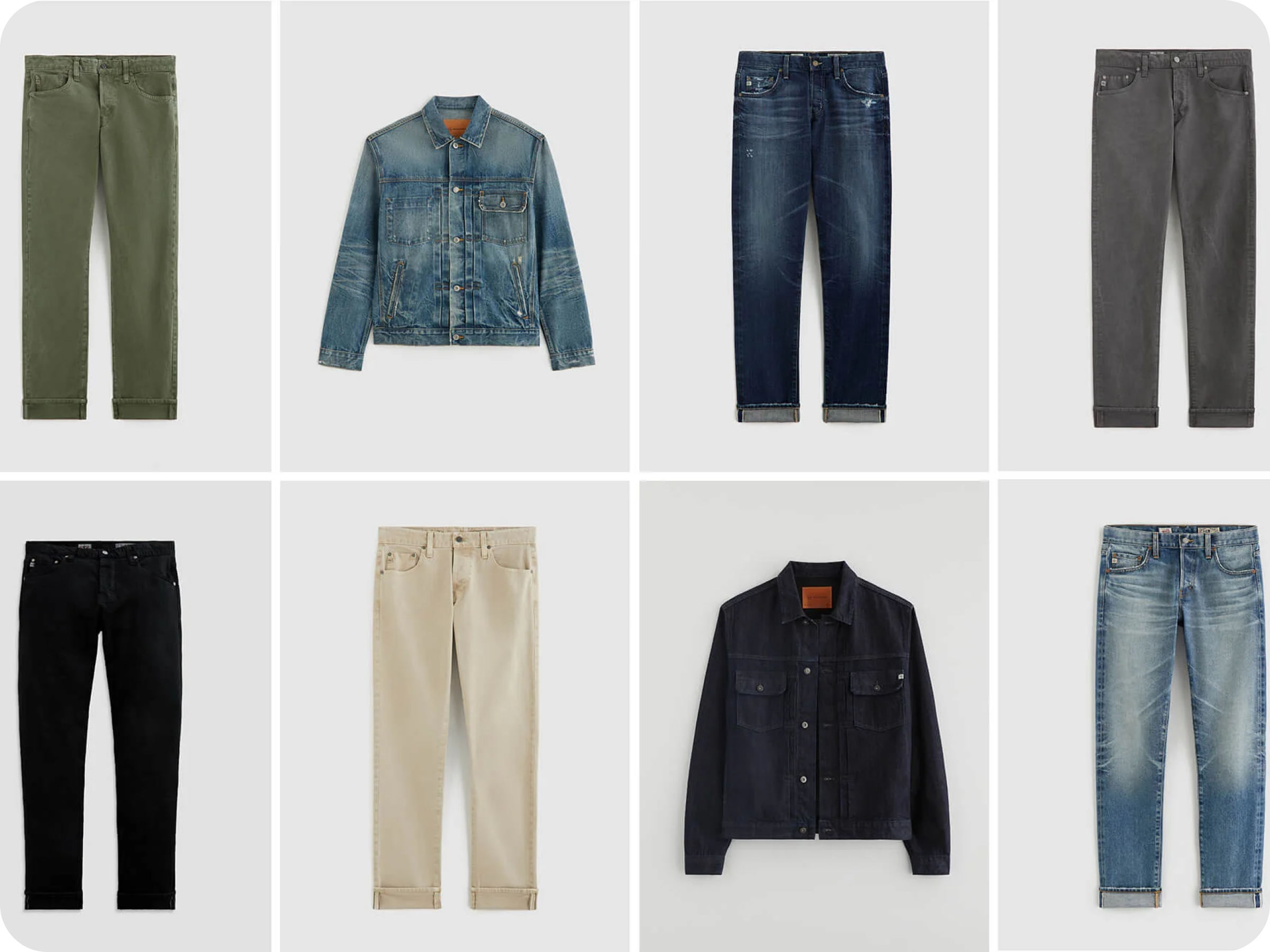
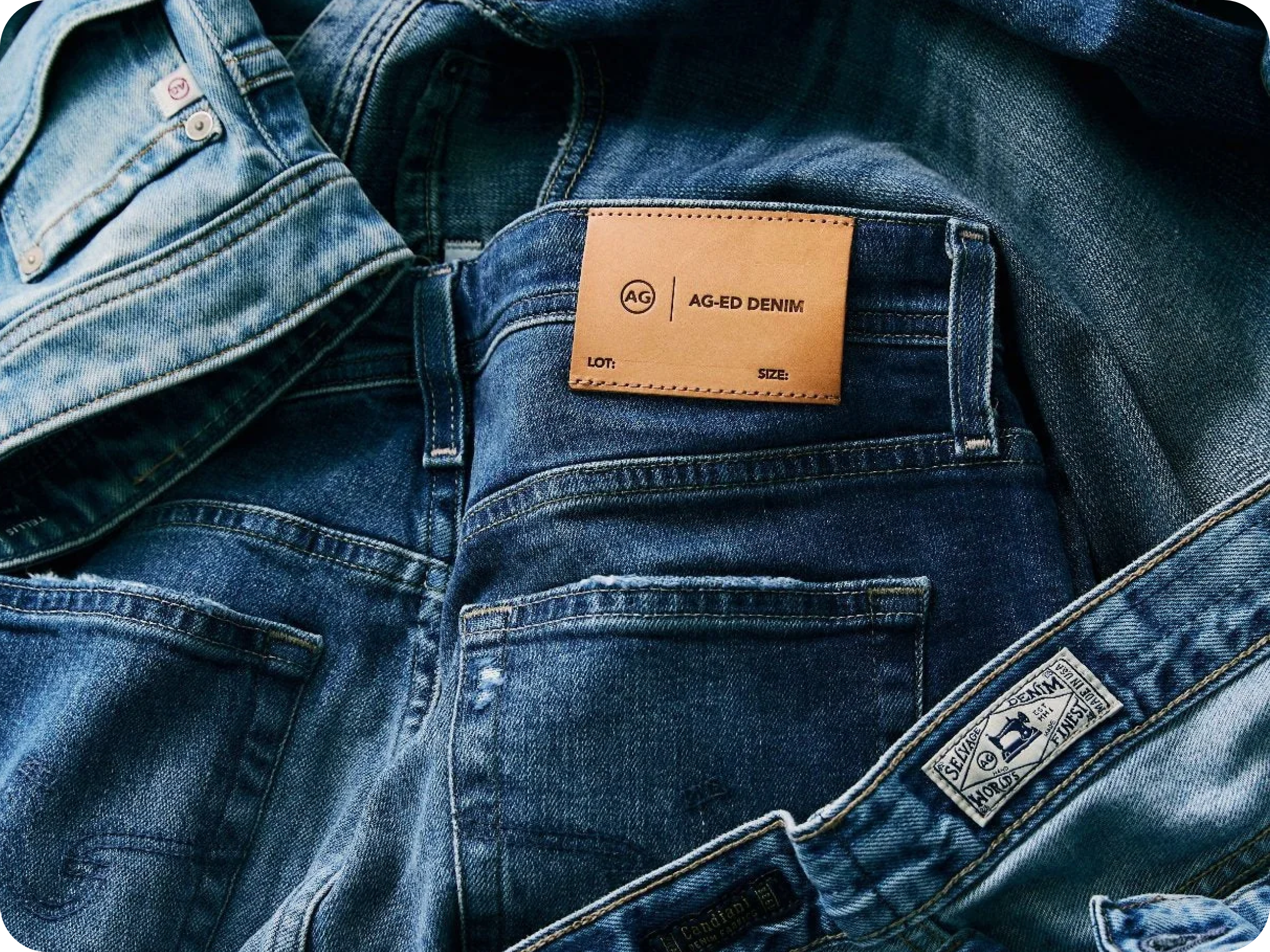
AG Jeans is a premium denim and lifestyle brand where fit, fabric, and finish matter — and where the online experience has to do more than simply “return results.”
As the business expanded into more categories, the team saw that search and browse had a direct effect on performance, shopper confidence, and revenue. Over time, their previous setup became harder to maintain and to justify from both technical and operational perspectives.
The Challenge
Product Discovery Created Operational Drags
The cost of maintaining AG Jeans’ old search solution began to outweigh its value.
On the technical side, implementation was adding substantial overhead, especially on collection pages. That made search and merchandising a performance conversation, not just a feature conversation.
“[The merchandising team] needed 26 JavaScripts to render a collection page. And that was putting a tremendous amount of load on our web vitals that were in the red altogether.”
- Milosh Nikodijevic, Director of Product Management, AG Jeans
At the same time, the merchandising team was dealing with a setup that was harder to operate than it should have been. Routine merchandising changes were tied to complex JSON rule management, which slowed execution and made even straightforward updates more dependent on developer time than AG Jeans wanted.
That combination — performance overhead on one side, operational complexity on the other — created a bigger business problem. Discovery was becoming something the team had to fight through instead of something they could use to move faster.
“[The merchandising team] needed 26 JavaScripts to render a collection page. And that was putting a tremendous amount of load on our web vitals that were in the red altogether.”
- Milosh Nikodijevic, Director of Product Management, AG Jeans
At the same time, the merchandising team was dealing with a setup that was harder to operate than it should have been. Routine merchandising changes were tied to complex JSON rule management, which slowed execution and made even straightforward updates more dependent on developer time than AG Jeans wanted.
That combination — performance overhead on one side, operational complexity on the other — created a bigger business problem. Discovery was becoming something the team had to fight through instead of something they could use to move faster.
Inventory Gaps Forced Manual Workarounds
On top of that, the team was compensating for gaps in inventory-aware discovery because inventory data wasn’t feeding into their old solution properly.
So, to reduce the likelihood of out-of-stock items surfacing, the AG Jeans team built a manual ranking process based on inventory availability, revenue, and SKU coverage, then pushed that ranking back into the catalog as a fallback.
That workaround helped, but it also made the larger issue impossible to ignore: a core part of the discovery experience required continuous manual effort to keep it shopper-safe and business-aligned.
The Decision
A Product Discovery Platform That Fit the Way AG Jeans Actually Works
When the AG Jeans team began evaluating alternatives, they also considered broader platforms. But the criteria became clearer as the evaluation progressed.
First, they needed architectural alignment with Shopify. The closer a tool is to Shopify’s ecosystem and execution model, the easier it is to preserve site speed — and the less likely it is to introduce hidden overhead.
“The conversation started regarding how close would a search and merch tool be to Shopify? The communication [with Constructor] led me to conclude that Constructor is architecturally very close to Shopify… Therefore, you need only one JavaScript to render a page in Shopify.”
- Milosh Nikodijevic, Director of Product Management, AG Jeans
When the AG Jeans team began evaluating alternatives, they also considered broader platforms. But the criteria became clearer as the evaluation progressed.
First, they needed architectural alignment with Shopify. The closer a tool is to Shopify’s ecosystem and execution model, the easier it is to preserve site speed — and the less likely it is to introduce hidden overhead.
“The conversation started regarding how close would a search and merch tool be to Shopify? The communication [with Constructor] led me to conclude that Constructor is architecturally very close to Shopify… Therefore, you need only one JavaScript to render a page in Shopify.”
- Milosh Nikodijevic, Director of Product Management, AG Jeans
While that fit mattered, so did focus. AG Jeans didn’t want a monolithic suite that solved many problems broadly. They wanted a dedicated discovery layer that could be operationally manageable and commercially meaningful.
“I'm not a big fan of doing everything like a sort of Swiss Army knife approach… The thing that appealed to us was that Constructor was very laser-focused on search and merch and using AI and actually boosting conversions.”
- Milosh Nikodijevic, Director of Product Management, AG Jeans
That made Constructor feel like the right match: purpose-built for search and merchandising, aligned with Shopify, and focused on business outcomes rather than platform sprawl.
The Proof Schedule
Using Real Shopper Behavior to Identify Opportunities, Before Going All In
During the Proof Schedule, AG Jeans identified meaningful patterns in shopper behavior before launch, including how customers were using facets and where merchandising decisions were most likely to have the biggest impact.
That early visibility helped the team move into implementation with more confidence and a clearer sense of where Constructor could drive value first.
Implementation
A Rollout that Felt Collaborative Instead of Opaque
Implementation stood out for its speed and clarity, both of which kept the rollout moving and reduced the amount of project overhead typically associated with a platform change.
“[It was] very impressive, how smooth it all went. The team was so responsive and answered our dev questions in a super rapid and detailed way. I honestly don't recall getting answers so fast and so clear from anybody ever [before].”
- Jason Humphrey, Senior Site Merchandiser, AG Jeans
Implementation stood out for its speed and clarity, both of which kept the rollout moving and reduced the amount of project overhead typically associated with a platform change.
“[It was] very impressive, how smooth it all went. The team was so responsive and answered our dev questions in a super rapid and detailed way. I honestly don't recall getting answers so fast and so clear from anybody ever [before].”
- Jason Humphrey, Senior Site Merchandiser, AG Jeans
There was also transparency. Instead of being removed from the implementation process, AG Jeans could see behind-the-scenes decisions happening in real time and stay close to the work, thanks to a group-wide Slack channel where all stakeholders can participate (a staple of the Constructor partnership).
Once the platform was in the team’s hands, setup moved quickly, with all of AG Jeans’ facets configured in a day. That speed allowed the team to move from a discovery setup that created work to one that removed friction, almost instantly.
The Results
Better Site-Wide Performance and Less Intervention
After launch, AG Jeans saw measurable gains across core ecommerce metrics within 4 weeks:
The gains were not limited to topline metrics. They also showed up in the on-site experience. According to DYODE, the systems integrator involved in AG Jeans’ Shopify implementation and connector work, one of the most noticeable improvements was performance.
"The biggest improvement we found is related to site performance. By eliminating the assortment of required files from AG's prior search tool and instead working with a React package, implementing the Constructor platform became more intuitive and significantly easier to manage."
— Kevin Stites, Director of Web Development, DYODE
And as performance, ranking, and workflow improved, the team found they could step back from constant “rule-building” and let the system do more of the work.
“Less is more when it comes to allowing the algorithm and Constructor to do their thing best. There’s very little need for intervention.”
- Jason Humphrey, Senior Site Merchandiser, AG Jeans
Looking Ahead
Supporting Category Expansion Without Losing What Already Works
Looking ahead, AG Jeans sees product discovery as an important lever for surfacing newer categories while continuing to serve the products shoppers already come for. That matters as the brand expands into areas like hats and knitwear, where discovery can help build familiarity and drive cross-sell opportunities without disrupting the core experience.
Uncover lost revenue opportunities with a complimentary Search Experience Audit.
According to the 2025 State of Ecommerce Search & Product Discovery Survey, nearly 70% of shoppers think the search function on retail websites needs an upgrade. Our team has run over 1,000 A/B tests to identify easy-to-implement algorithmic and UX improvements that get results. Use their research to your advantage with a complimentary Search Experience Audit — no strings attached.
- Analyze your search results quality
- Identify "no results" pages
- Pinpoint irrelevant results for long-form queries
- Uncover UX opportunities for Search, Autocomplete, and PLPs
According to the 2025 State of Ecommerce Search & Product Discovery Survey, nearly 70% of shoppers think the search function on retail websites needs an upgrade. Our team has run over 1,000 A/B tests to identify easy-to-implement algorithmic and UX improvements that get results. Use their research to your advantage with a complimentary Search Experience Audit — no strings attached.